Pr. Omar Haroun
Available at SILA 2026

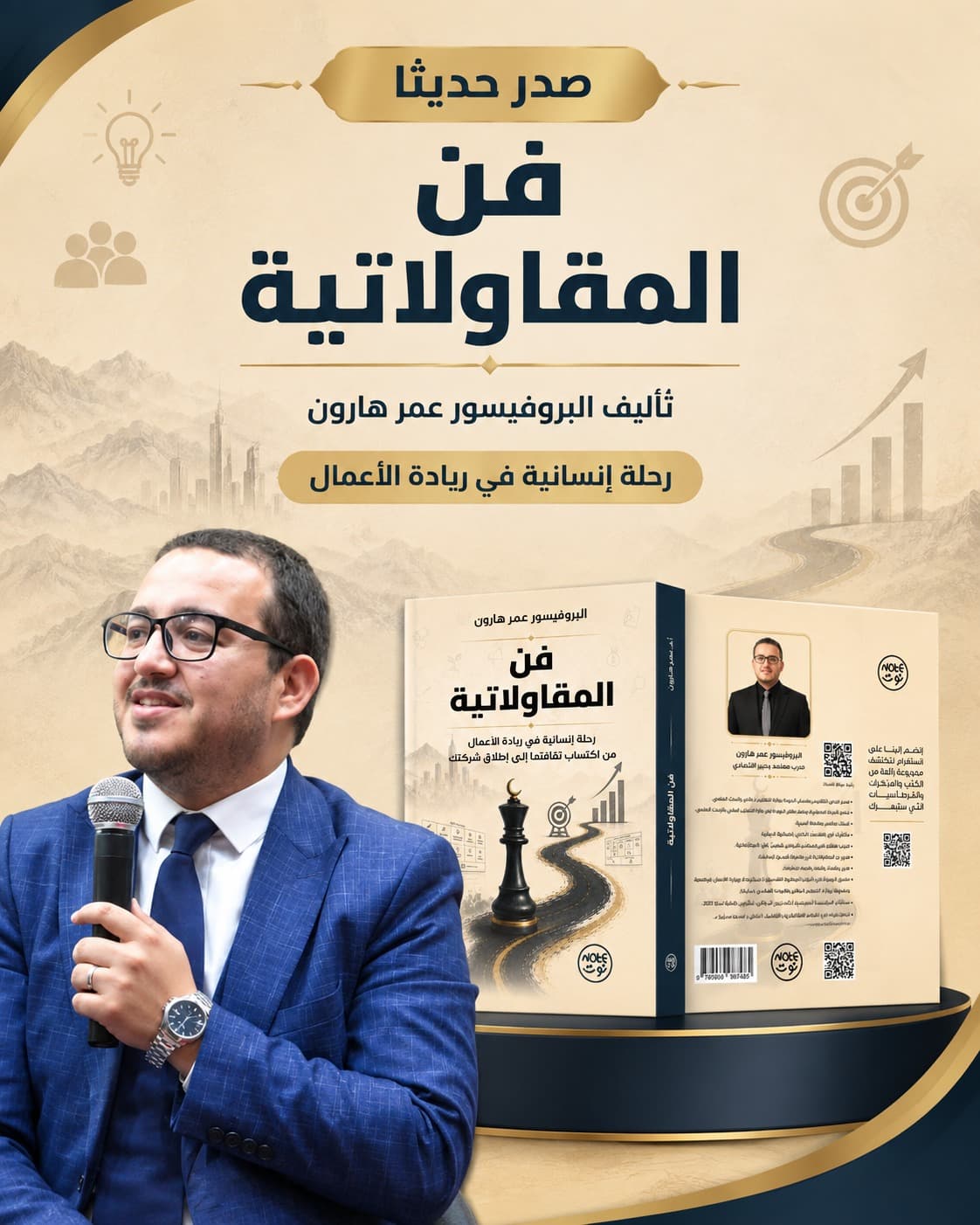
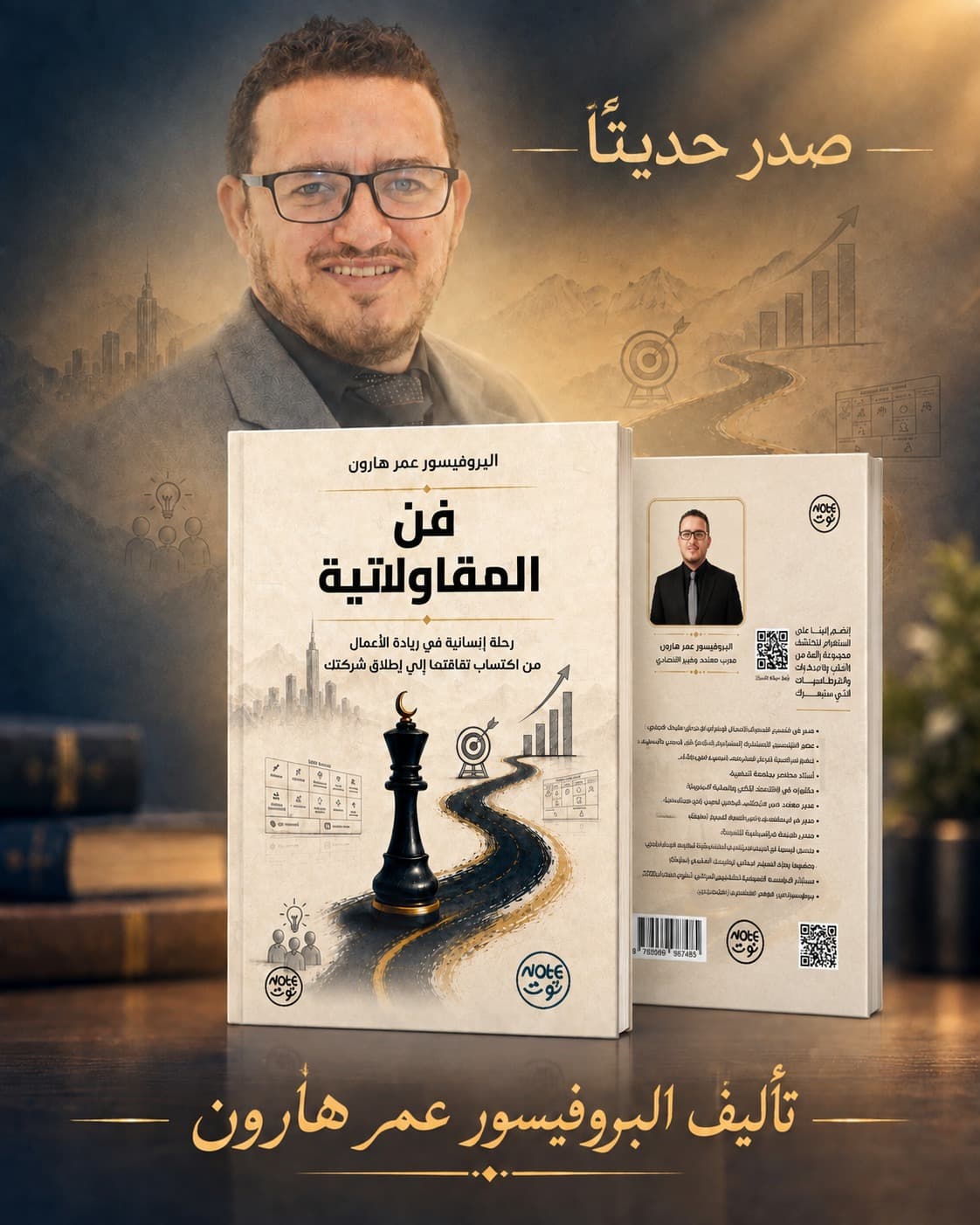
By Pr. Omar Haroun

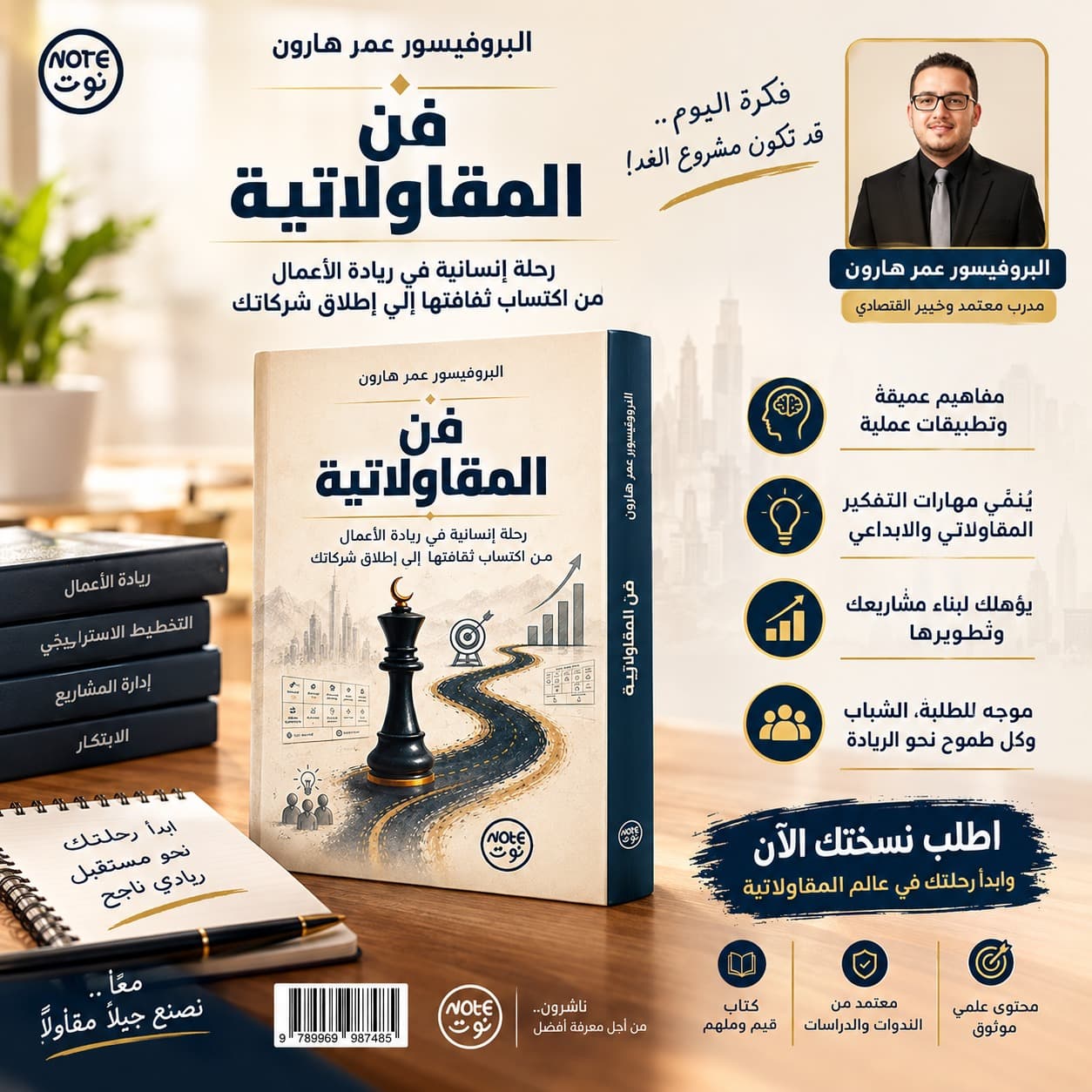
فن المقاولاتية

The Art of Entrepreneurship

A human journey through entrepreneurship, from embracing its culture to launching your company

«The main aim of this book is to put anyone who wants to understand this world on the right track.»
Introduction
  • 109 pages
  • 5 chapters
  • Note Éditions
  • 2026
Back cover of فن المقاولاتية, featuring the author's biography

Save the date · 29th edition · SILA 2026

“The Art of Entrepreneurship” at the Algiers International Book Fair

October 29 to November 7, 2026

Palais des Expositions, Pins Maritimes, Mohammadia, Algiers

Daily, 10:00 to 19:00

The book is available from Note Éditions

Official SILA website

The fair opens in

--

days

--

hours

--

minutes

--

seconds

The key

«في عصر الذكاء الاصطناعي يمكنك أن تجد التعاريف الصحيحة والنظريات المفسرة بضغطة زر، لكن من الصعب أن تجد القصة الكاملة للتجربة البشرية إلا عند البشر.»

In the age of artificial intelligence, you can find the right definitions and explanatory theories at the click of a button, but the full story of human experience is hard to find anywhere except among people.

«This approach led me to cut back on definitions and concepts and to focus on analysis and on linking the variables of the subject. So in this book I talk about culture, China and Malek Bennabi, just as I talk about unicorns and scalability.»
From the introduction, translated from Arabic

Excerpt

“What do you dream of after graduating?”

«ما كانت بدايته محرقة فنهايته مشرقة»

What begins in burning ends in radiance.

Ibn Ata Allah al-Iskandari, epigraph to “The Problem”

Seeing how muddled the very notion of entrepreneurship is, I have always wondered how best to open my lectures, talks and seminars on the subject. I found nothing better than one question: why study entrepreneurship, why become an entrepreneur?

It is a question that usually startles the lecture hall, because our students are not used to asking themselves why they study this or that subject, or what a training course is for.

To get past the shock of that first question and the surprise on people's faces, I usually rephrase it: “As students, what do you dream of after you graduate?”

Everyone answers with one voice: “A job.”

And I quickly follow up: “Where can a graduate find work?”

… Caught between the public and the private sector, these inexperienced students forget that, worldwide, the highest unemployment rates are usually found among university graduates…

“The Problem: why entrepreneurship, and where does it lead?”, pp. 16–18, translated from Arabic

Figures from the book

  • 70%+

    share of young people in the population of most MENA countries

  • ×2

    graduates are half as likely to find a job as primary- and middle-school leavers, according to the ILO

  • 90%

    of ideas fail when innovative projects are launched

The Problem, pp. 18–19, and Chapter 4, p. 80

Who is this book for?

01

Students and graduates

Those thinking about a job after graduating who want to know whether starting their own project is an option.

02

Idea-holders and startups

Those with an idea who want to study it, build a prototype and reach a first customer.

03

Teachers and trainers

Those who teach entrepreneurship or supervise students in incubators and entrepreneurship centres.

04

Incubators and support bodies

Pre-incubation, incubation and acceleration as described in Chapter 4.

05

Business leaders

Open innovation, venture funds and social responsibility, in Chapter 5.

06

Readers interested in Algeria's economy

Chapter 5 is devoted to entrepreneurship and the Algerian economy.

What the book covers

  1. 1

    The difference between a traditional company and a startup, and where ideas come from: imitation, emulation and innovation.

  2. 2

    How entrepreneurship evolved from Adam Smith and Schumpeter to the knowledge economy, with examples such as Airbnb and Uber.

  3. 3

    The difference between discovery, invention and innovation, and when you need a patent.

  4. 4

    Chapter 3's question, a crisis of means or of culture, through China's experience and Malek Bennabi's thought.

  5. 5

    The theoretical schools of entrepreneurship, the entrepreneur's traits and the components of the ecosystem.

  6. 6

    Why projects and startups fail.

  7. 7

    Studying ideas: an ideas list, an evaluation matrix and a feasibility study following the ILO approach.

  8. 8

    Proposals for developing entrepreneurship in Algeria, from school to university and the private sector.

Contents

  1. Introduction

    p. 13

    Why the author wrote this book and what he wanted to give the reader.

  2. The Problem: why entrepreneurship, and where does it lead?

    p. 15

    The question asked in the lecture hall, and graduate unemployment.

  3. The Hypotheses: what solution when jobs are scarce?

    p. 20

    Solutions tied to public policy and the university, and individual solutions within every graduate's reach.

  4. Chapter 1: From the project approach to the entrepreneurial approach

    p. 25

    What projects are and their types, the project life cycle, traditional companies versus startups.

  5. Chapter 2: From the birth of entrepreneurship to the knowledge economy

    p. 35

    The academic logic of entrepreneurship, entrepreneurial education, the knowledge economy, discovery, invention and innovation.

  6. Chapter 3: A crisis of means, or a crisis of culture?

    p. 48

    China's 40 years from famine to leadership; Malek Bennabi; cultural subjugation.

  7. Chapter 4: From understanding to grounding

    p. 63

    Theoretical foundations and approaches, the ecosystem, risks, studying ideas and feasibility, from idea to startup.

  8. Chapter 5: Entrepreneurship and the Algerian economy

    p. 97

    An innovative school and society, the national innovation strategy, open innovation, venture funds, the university.

  9. Conclusion

    p. 106

    Results of following 47 university incubators in the Centre region.

Chapter 4

From an innovative idea to a startup

The stages shown in Figure 7 of the book.

1

Pre-incubation

Spreading entrepreneurial culture and explaining the laws and facilities available to anyone starting a company.

2

Incubation: the prototype

Selecting ideas through competitions and building a testable prototype (MVP).

Incubation: 6 to 12 months

3

Incubation: the first customer

Presenting the prototype to a potential customer, reaching the final model and the first order.

4

Acceleration

Finding partners to fund expansion and reaching exponential profit growth.

6 to 9 months

Idea-study tools presented in the book

Ideas list

Writing down ideas with technical, economic and environment-analysis skills in mind.

Evaluation matrix

Comparing ideas on a 0 to 5 scale and keeping the highest-scoring one.

Innovative-idea canvases

Models such as BMC and Lean covering added value, customers, costs and revenues.

Feasibility with SIYB/GERME

The ILO programme: generate your business idea, start your business, improve your business.

Two online ILO courses

Chapter 4 of the book draws on the ILO's SIYB / GERME approach for feasibility studies, and the author is a certified trainer in this programme. Two of its modules are available online, in Arabic.

ILO International Training Centre

قم بإنشاء فكرة مشروعك عبر الإنترنت

Generate Your Business Idea (GYB) module

An interactive module for finding a business idea that suits your means, your management skills and the real needs of your surroundings and the market.

Open the module

Programme video · Calculating the costs of a retail business, in Arabic

ILO International Training Centre

ابدأ مشروعك التجاري عبر الإنترنت

Start Your Business (SYB) module

An interactive module showing how to draw up your project's business plan. Lessons are taken in order, with a quiz to pass before moving on.

Open the module

Programme video · Calculating the cost of your product or service, in Arabic

Quotes from the book

الابتكار قدرة بشرية على تطويع ما توفر ووُجد في حل المشاكل المؤرقة للبشر بطريقة فريدة.

Innovation is the human ability to bend what already exists to solve the problems that trouble people, in a unique way.

Chapter 2
المقاولاتية هي البحث عن مشكلة اقتصادية والتوجه نحو إيجاد حلول ابتكارية لها بهدف تحقيق أرباح.

Entrepreneurship is looking for an economic problem and setting out to find innovative solutions to it, in order to make a profit.

Chapter 4
فالعالم اليوم يبحث عن الأذكياء لا الحافظين.

Today's world is looking for the clever, not for those who memorize.

Chapter 2
من لم يتحرر من منتجاتهم لن يستطيع تحرير عقله من أفكارهم وإن حاول.

Whoever has not freed himself from their products cannot free his mind from their ideas, however hard he tries.

Chapter 3
العبرة ليست بعدد الاختراعات التي تحققها بل بقيمتها في تحقيق القفزة التي تطمح إليها.

What matters is not the number of inventions you make, but their value in achieving the leap you aspire to.

Chapter 2
غياب أو تعطّل هذا المحيط سيحوّل أي اقتصاد إلى مقبرة للأفكار مهما كانت جيدة أو متميزة.

If this ecosystem is missing or breaks down, any economy becomes a graveyard of ideas, however good they may be.

Chapter 4
الثقافة هي القناعات التي نحملها، ونعيش بها وندافع عنها وإن تطلّب الأمر الموت من أجلها.

Culture is the convictions we carry, live by and defend, even if it costs us our lives.

Chapter 3
لم يعد العالم في حاجة للتعاريف المعاد رسكلتها من المراجع والكتب.

The world no longer needs definitions recycled from references and books.

Conclusion
«كم أتمنى أن نبرمج عقولنا أن الممكن أكبر بكثير مما نعتقد، وأن التطور أقرب إلينا مما نتصور.»

How I wish we would program our minds to believe that the possible is far greater than we think, and that progress is closer than we imagine.

أ.د. عمر هارون · Chapter 5

Names and ideas discussed in the book

Adam SmithSchumpeter and creative destructionRobert SolowDavid McClellandMalek BennabiChina's experienceKnowledge economyOpen innovationBlue oceanUnicornsScalabilityMVPTeslaChatGPTAirbnb and UberBig Five modelBMC and Lean CanvasSIYB / GERMEDecision 1275Startup label

109

pages

5

chapters

7

figures

9

tables

From the book's conclusion

47

university incubators followed by the author as coordinator for the Centre region

230

entrepreneurship trainers trained with his colleagues on the commission

62+

training sessions and awareness campaigns, in person and online

«A journey that convinced me we have exceptional talent, whether among the holders of innovative ideas or among those who supervise them: teachers, professionals and even administrators.»
Conclusion

The book trailer

Just released
Just released

Talks on the book's themes

دراسة الأفكار المقاولاتية

Study and support of entrepreneurial ideas

ريادة الأعمال كآلية للتنمية الاقتصادية في الدول الإسلامية

Conference on entrepreneurship as a driver of economic development in Islamic countries

الخبير الاقتصادي عمر هارون للوسط: صندوق دعم المؤسسات الناشئة يفترض أن يتم إنشاؤه من طرف الخواص

Television interview: startup funding should come from the private sector

عمر هارون — وزارة التعليم العالي والبحث العلمي (Partie 1)

Talk on higher education and scientific research in Algeria

Economics & entrepreneurship expert & quality

The Author

Pr. Omar Haroun

أ.د. عمر هارون

Pr. Omar Haroun is Deputy Director for Evaluation and Quality Assurance at the Ministry of Higher Education and Scientific Research. A Professor at the University of Medea and holder of a university habilitation in economics, he specializes in international economics, entrepreneurship, and SME financing, combining academic, institutional, and managerial responsibilities, including serving as Director of the University Business Incubator.

Read the full biography →

Also on the site

Frequently asked questions

Where can I find the book?+

At the Algiers International Book Fair, SILA 2026, October 29 to November 7, 2026, at the Palais des Expositions, Pins Maritimes, with Note Éditions. You can also contact the publisher: notedzpub@gmail.com or www.notedz.com.

Is it suitable for someone new to entrepreneurship?+

Yes. The author explains in the introduction that he reduced the share of definitions to focus on analysis, with the aim of putting anyone who wants to understand this world on the right track.

Does it include practical tools?+

Yes: an ideas list, an evaluation and ranking matrix, canvases for studying innovative ideas, feasibility-study elements following the ILO approach, and the stages from idea to startup. The book has 7 figures and 9 tables.

What language is it published in?+

In Arabic, by Note Éditions, in 2026. ISBN 978-9969-9874-8-5.

Bulk orders or inviting the author?+

To invite the author to a lecture or a meeting about the book, or for a bulk order from a university, an incubator or a company, use the contact form.

Where to find the book

Today's idea… could be tomorrow's venture!

01

At SILA 2026

October 29 to November 7, 2026, with Note Éditions.

Palais des Expositions, Pins Maritimes, Mohammadia, Algiers

Official SILA website

02

From the publisher

Note Éditions

03

Bulk orders and invitations

For universities, incubators and companies.

Contact form

Author

Pr. Omar Haroun

Publisher

Note Éditions

ISBN

978-9969-9874-8-5

Language

Arabic